UPCOMING EVENT:
12 December 2025. Book Launch: Engendering the Stage in the Age of Shakespeare and Beyond
Posted on by Peter Cockett
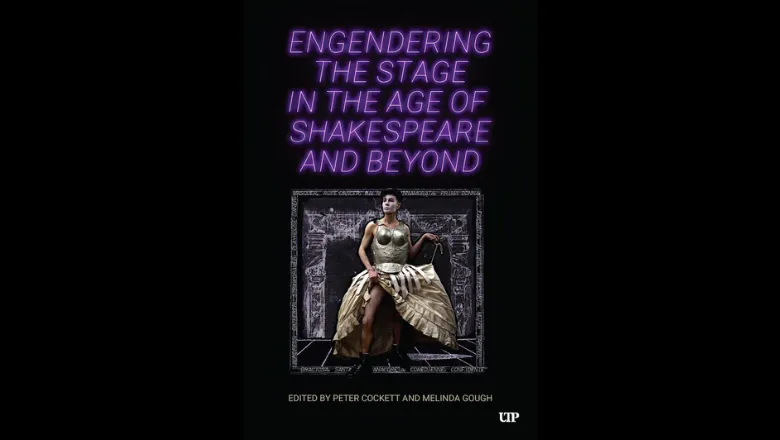 Please join us as we celebrate the publication of our edited volume, Engendering the Stage in the Age of Shakespeare and Beyond, just out with University of Toronto Press!
When: 12 December 2025 18:00 to 19:30
Where: King’s Building, Strand Campus, London
Register here!! Hosted by the Shakespeare Centre London, this event is free and open to the public.
PREVIOUS EVENTS:
November 11-20, 2022. The Force of Habit, Lyons Family Studio, McMaster University
Posted by Peter Cockett
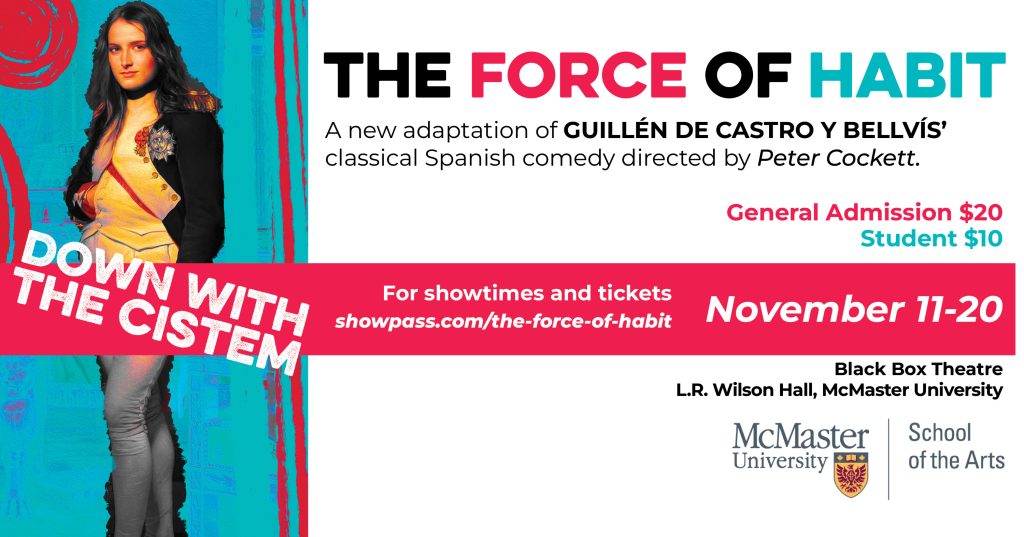
McMaster’s School of the Arts’ mainstage production is a new English adaptation of the 17th century Spanish original that draws on the rich textual evidence of trans histories, gender fluidity, and queer possibility. Two siblings are separated at birth due to the violence of their grandfather. Hipolita, who was assigned female at birth, has been raised as male at their father’s side on the battlefields of Flanders. Their sibling Felix, who was assigned male at birth, has been raised in the comfort and luxury of the home under the gentle protection of their mother. When the grandfather dies, the family is reunited, and the parents decide that their children must return to the genders assigned to them at birth. The siblings have other ideas!
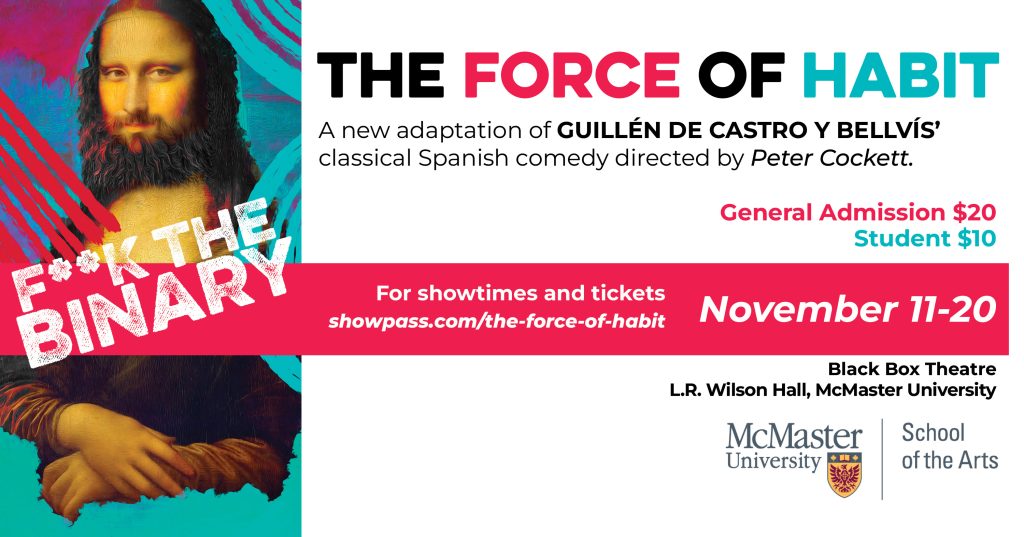
The Force of Habit is the Spanish source play for Love’s Cure, one of the plays explored at Engendering the Stage’s Stratford Lab. Working from UCLA’s Diversifying the Classics translation, the production adapts the original play to give the story the happy ending the gender diverse student collaborators desired. The production has been developed in tandem with a graduate class of dramaturges led by Melinda Gough, inspired by Simone Chess’ principal of holistic dramaturgy.
Program notes, dramaturgical material, and photos from the show are accessible here. Video will be posted once edited.
January, 2020. Ruff Play with Shakespeare: combat, gender and entertainment
Posted on by Callan Davies

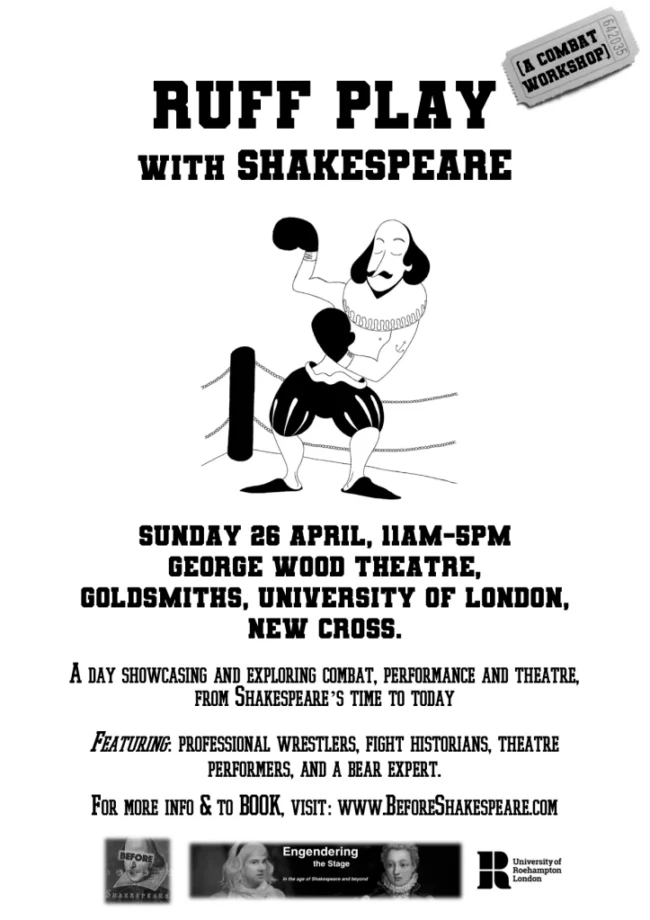
Before Shakespeare and Engendering the Stage are delighted to announce our next performance workshop, focusing on combat as entertainment—in both Shakespeare’s time and today. Combat, acrobatics and feats of strength were everywhere in the early modern period: wrestling happened on the streets, in the countryside and in plays such as As You Like It, and the most famous male Tudor, Henry VIII, was also a renowned wrestler. Women and men performed strength, sword and rope displays for public audiences. Animal combat was probably an even more popular cultural pursuit than theatre and was watched by all sectors of society across the country and in specially-designed venues in London that were in direct competition with the playhouses. Although modern culture tends to sharply distinguish between theatre and combat as forms of entertainment, the playhouses of Shakespeare’s time were dedicated spaces for play and games of all kinds, and were as much fencing venues as theatres. Likewise, up until the twentieth century music halls and theatres also hosted boxing and wrestling matches, and employed boxers and wrestlers for sparring exhibitions or as actors in plays.
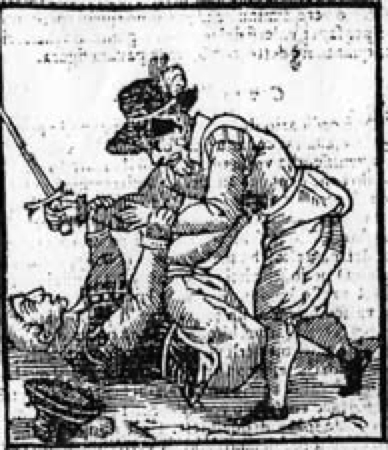
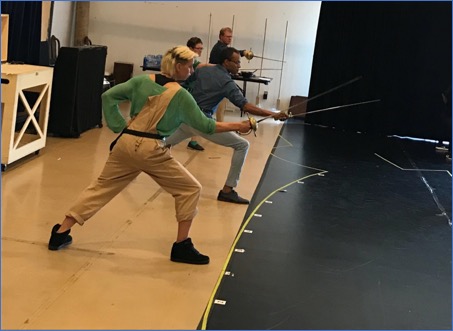
These historical matters have parallels with the contemporary UK wrestling scene. The history of theatre is one of deliberately broken traditions because the London playhouses were closed down in 1642, and boxing and wrestling venues have similarly been controversial spaces subject to control and suppression. In the late-nineteenth century legal changes sent some form of public combat underground, men’s wrestling was banned in London in the 1930s, women’s wrestling in London in the ’50s, ’60s and ’70s, and the decision to stop broadcasting wrestling on television in 1985 drastically affected its audience and popularity. But now the UK wrestling scene is so thriving and exciting that a current research project is actually called Wrestling Resurgence. Just as the work of our two projects has stressed the role of women and marginalised people in early modern performance, including combat and strength displays, so contemporary wrestling is thinking anew about gender, sexuality, race and disability in the ring and in its audiences.
Our hope is to use this event to bring these various ideas together, with a focus on using practice and performance as much as conversation to tease them out. Though we’ve swapped staff, methods, ideas and findings before, this will be the first time that Engendering the Stage and Before Shakespeare are in a room together testing out our ideas in performance. We will bring together combat and theatre historians, fight directors, professional wrestlers, sports scholars and animal archaeologist for a conversation in which no one person is an expert, and look forward to generating new conversations and discoveries between our speakers and our audience. For anyone interested in street performance, popular play, combat as a form of entertainment or the links between theatre, circus and sport, we’d be excited to have you join us.
November 4, 2019. Staged Reading of Juan Pérez de Montalban’s Lieutenant Nun
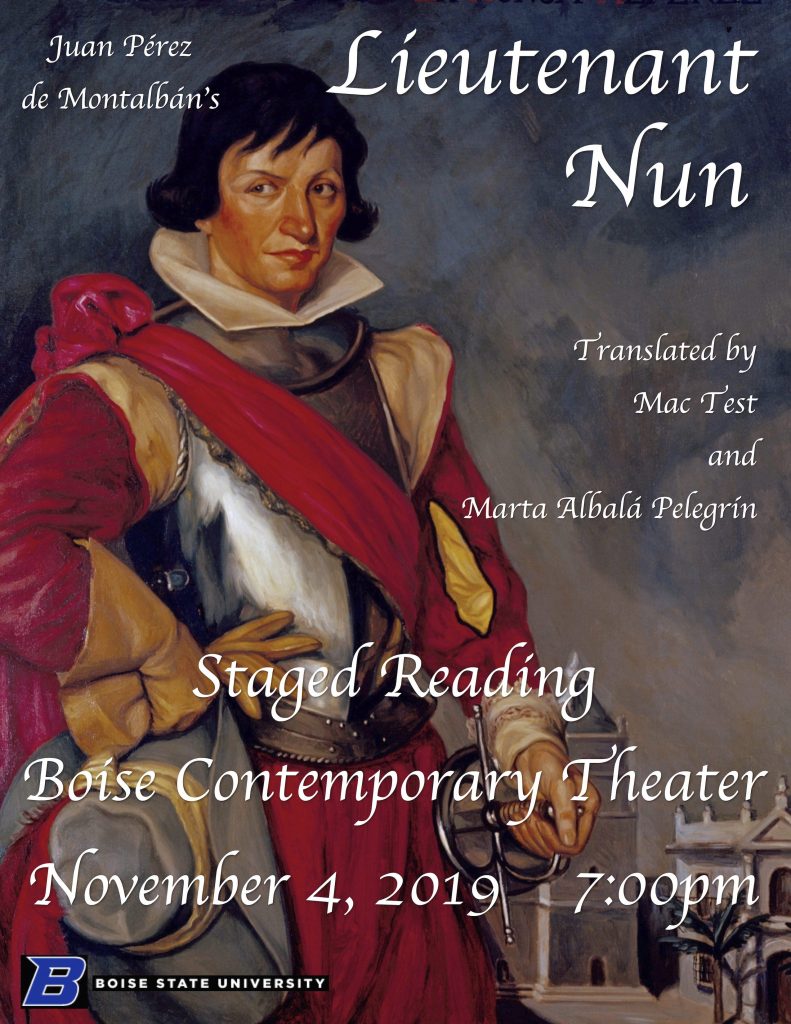
Monday November 4 2019, at 7 pm, Boise Contemporary Theater will be doing a staged reading of the Lieutenant Nun (La monja alférez), translated by Mac Test (together with Marta Albalá Pelegrín). The play is based on the historical personage of Catalina de Erauso, who fought as a conquistador in Peru and Chile from 1600-1617. Amazingly, upon returning to Europe Erauso received a Papal Dispensation from Pope Urban VIII to remain cross-dressed and live as a transgender person. FREE TO THE PUBLIC. No tickets necessary.
October 2019. Announcing “Engendering the stage: the records of early modern performance” — a new archival research project led by Clare McManus and Lucy Munro
This January 2020, with funding from the Leverhulme Trust, a research team led by Professor Clare McManus (University of Roehampton) and Professor Lucy Munro (King’s College London) will reassess the archival records of early modern English drama to highlight the contributions of a diverse range of performers to theatrical culture in the sixteenth and seventeenth centuries.
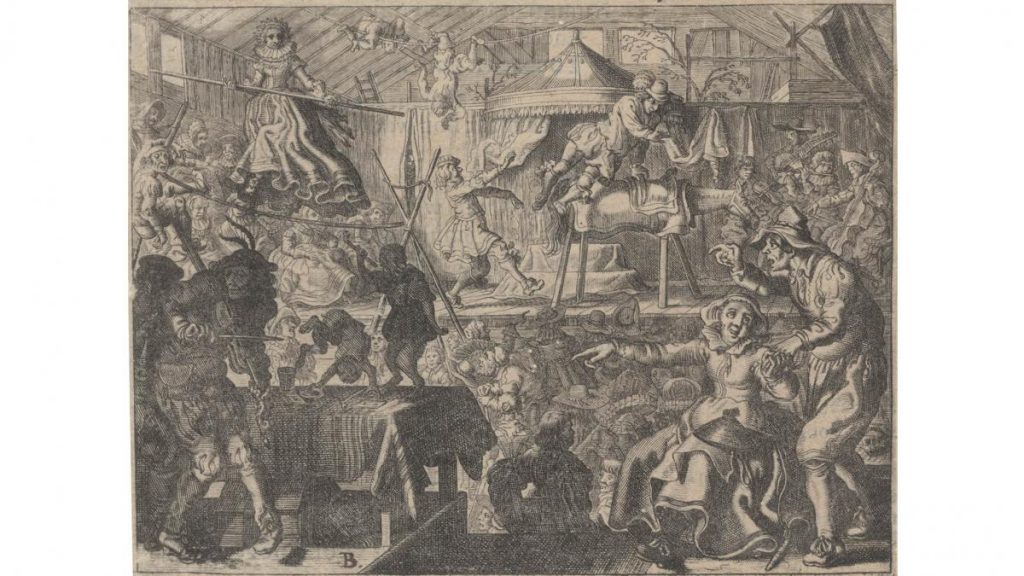
Focusing on the period between the accession of Mary Tudor in 1553 and the injunction against boy-actresses issued by Charles II in 1662, the project will reassess the contribution of female, male and, in our current terms, trans, nonbinary or gender nonconforming performers to the commercial, academic, court, civic and household stages of early modern England.
The research team is currently seeking applicants for one postdoctoral research position and two Ph.D. studentships. You can also read more about the project itself here.
10 May 2019. London, An Apology for Actors: Early Modern Playing Then and Now.
Taking as its starting point the 400th anniversary of the deaths of the great early modern actors Richard Burbage and Nathan Field, this workshop explores through short papers, performance workshops and round-table discussion the dynamics of playing in the late sixteenth and early seventeenth centuries, and the implications of expanding our knowledge of early modern practices for the present day.
Participants included Lucy Munro (King’s College London), Harry McCarthy (University of Exeter), Peter Cockett (McMaster University), Melinda Gough (McMaster University), Clare McManus (University of Roehampton) and Dolphin’s Back.
13 May 2019. London, Shakespeare’s Globe: Research in Action.
Casting women in men’s roles may seem like a radical innovation of our times, but playing with gender was an exciting feature of early modern theatre practice across Europe. Professor Clare McManus and Professor Lucy Munro help us to discover the history of gendered performance on the Renaissance stage.
17 March 2019. Toronto (Sheraton Centre, Grand East): Renaissance Society of America Roundtable: Gender on the (Transnational) Early Modern Stage, Then and Now: A Performance as Research Approach
This roundtable considered how portrayals of gender in early modern performance resonate with today’s opening up of the gender spectrum to a non-binary paradigm. Specifically, discussants shared findings arising from a recent five-day Performance as Research workshop at the Stratford Festival centered in collaboration between academics and theatre practitioners. The roundtable asked: how might collaborative work of this kind stimulate a cultural rethink of the engendering processes of the early modern stage while also supporting increasingly open approaches to gender in the contemporary professional theatre industry?